
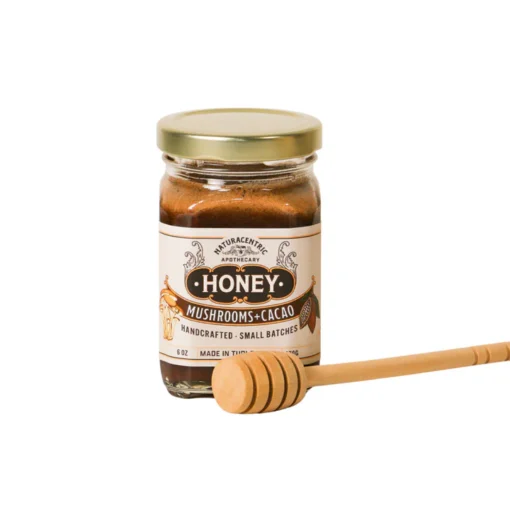
Psilocybin Infused Honey – Educational Guide
The term “psilocybin infused honey” is used in some informal and underground contexts to describe honey that is believed to contain or be combined with psilocybin-containing mushrooms or extracts. It is not a standardized pharmaceutical product, nor is it recognized as a regulated food or supplement in most countries.
To understand this concept, it is more accurate to separate it into two parts:
- Honey as a food medium
- Psilocybin as a psychoactive compound found in certain mushrooms
This guide explains the science behind psilocybin, why people talk about “infusions,” how edible-based psychoactive products are viewed in general, and the important legal and safety issues involved.
What Is Psilocybin?
Psilocybin is a naturally occurring psychoactive compound found in certain species of mushrooms often called “magic mushrooms.”
Psilocybin
Once ingested, psilocybin is metabolized by the body into psilocin, the active compound responsible for its psychoactive effects. Psilocin interacts with serotonin receptors in the brain, particularly the 5-HT2A receptor, which influences perception, mood, and cognition.
Effects associated with psilocybin (in general scientific literature) may include:
- Altered sensory perception
- Changes in thought patterns
- Altered sense of time
- Emotional intensification
- Hallucinatory experiences at higher doses
However, these effects are highly variable and depend on many factors such as dose, environment, mental state, and individual biology.
What Are Psilocybin Mushrooms?
Psilocybin is found in certain species of fungi, commonly referred to as psychedelic mushrooms.
Psilocybin mushrooms
These mushrooms grow naturally in various regions of the world and contain varying concentrations of psilocybin and related compounds.
Important scientific points:
- Potency varies widely between species and even individual mushrooms
- Chemical composition is influenced by growing conditions
- They are biologically complex organisms, not uniform “drug products”
Because of this variability, standardization is extremely difficult outside controlled research environments.
What Is Honey as a Medium?
Honey is a natural substance produced by bees from nectar.
Honey
It has long been used as a preservative medium in traditional food preparation because:
- It contains low moisture levels
- It has antimicrobial properties
- It can preserve plant materials for extended periods
In various cultural contexts, honey has been used to store herbs, roots, and other botanicals. This is part of why it sometimes appears in discussions about herbal or psychoactive infusions.
What Does “Infused Honey” Mean?
The term “infused honey” generally refers to honey that has been combined with plant materials or extracts to transfer flavor, aroma, or active compounds.
In legal culinary contexts, infused honey may include:
- Herbs (like lavender or ginger)
- Spices
- Citrus peels
- Medicinal plants in regulated herbal systems
However, when the term is used in relation to psilocybin, it usually comes from informal or unregulated contexts, and it is not a standardized or legally recognized product category.
How Infusion Concepts Work (General Science)
From a general food science perspective, “infusion” refers to the process of transferring compounds from one material into another medium.
This can happen through:
- Soaking plant material in a liquid
- Heating (to increase compound transfer)
- Time-based steeping
- Fat or sugar-based extraction (depending on compound solubility)
Honey, because of its viscosity and sugar composition, can act as a carrier for certain plant compounds, though efficiency varies widely depending on the substance involved.
Important Reality Check: Standardization Issues
A key scientific issue with any “psilocybin honey” concept is lack of standardization.
Unlike pharmaceutical or regulated products:
- There is no consistent dosage measurement
- Potency is unpredictable
- Preparation methods are not regulated
- Chemical stability is not guaranteed
Psilocybin content in mushrooms already varies naturally, so combining it with a food medium introduces additional variability.
This makes any such mixture scientifically inconsistent and unreliable in terms of dosage control.
Chemical Stability Considerations
Psilocybin and psilocin are sensitive compounds.
They can be affected by:
- Heat exposure
- Light degradation
- Oxygen exposure
- Time and storage conditions
While honey can preserve certain materials, it does not guarantee chemical stability for psychoactive compounds. Over time, potency and composition may change in unpredictable ways.
Legal Status and Regulation
Psilocybin is a controlled substance in many parts of the world.
Controlled substance
Legal status varies significantly:
- Some regions allow medical or research use
- Some have decriminalized possession in limited contexts
- Many countries strictly prohibit production and distribution
Because of this, products described as “psilocybin infused honey” are generally not part of legal commercial food or supplement markets.
Safety and Risk Considerations
From a harm-reduction and public health perspective, there are several important risks associated with unregulated psychoactive food products:
1. Dosage uncertainty
Without precise measurement, it is impossible to reliably know how much active compound is present.
2. Delayed effects
Edible-based substances often take longer to take effect compared to other forms of consumption, which can lead to misinterpretation of onset timing.
3. Psychological variability
Effects of psilocybin can vary significantly depending on:
- Mental health state
- Environment
- Individual sensitivity
4. Product contamination risk
Unregulated preparation may introduce risks from:
- Improper handling
- Microbial contamination
- Misidentification of ingredients
Cultural and Historical Context
While modern “infused honey” terminology is relatively recent, honey itself has a long history in traditional medicine and herbal preparation systems.
Historically, honey has been used in:
- Herbal tonics
- Traditional remedies
- Fermented plant preparations
- Cultural preservation of botanicals
Psychoactive mushroom use also has historical roots in several indigenous and spiritual traditions, though those practices are distinct from modern commercial labeling.
Scientific Research Perspective
Modern research into psilocybin is primarily focused on:
- Mental health treatment (such as depression and anxiety research)
- Controlled clinical trials
- Neuropsychological effects
- Therapeutic frameworks in supervised settings
These studies use standardized pharmaceutical-grade psilocybin, not food-based mixtures.
This distinction is important because clinical research requires precise dosing and controlled environments, which are not possible in informal infused products.
Misconceptions
There are several common misconceptions:
1. “Honey stabilizes psilocybin reliably”
There is no strong scientific evidence that honey reliably preserves potency long-term.
2. “Infused honey is safe because it’s natural”
Natural origin does not guarantee safety, dosing accuracy, or legal status.
3. “All mushrooms with psilocybin are the same”
Different species and even individual samples vary significantly in potency.
4. “Edibles are predictable”
Psychoactive edibles are often less predictable due to absorption differences.
Conclusion
Psilocybin infused honey is an informal and non-standardized concept that combines honey with psilocybin-containing mushrooms or extracts. While honey is a traditional food medium and psilocybin is a naturally occurring psychoactive compound under scientific study, combining them outside regulated environments raises significant concerns regarding legality, safety, and dosage consistency.
From a scientific standpoint, psilocybin research is best understood through controlled clinical studies rather than unregulated food-based mixtures. As interest in psychedelic compounds grows, education, regulation, and harm reduction remain essential for responsible understanding.
Be the first to review “Psilocybin Infused Honey”
Related products
concentrates
concentrates
concentrates
concentrates
concentrates
concentrates
concentrates
Reviews
There are no reviews yet.