
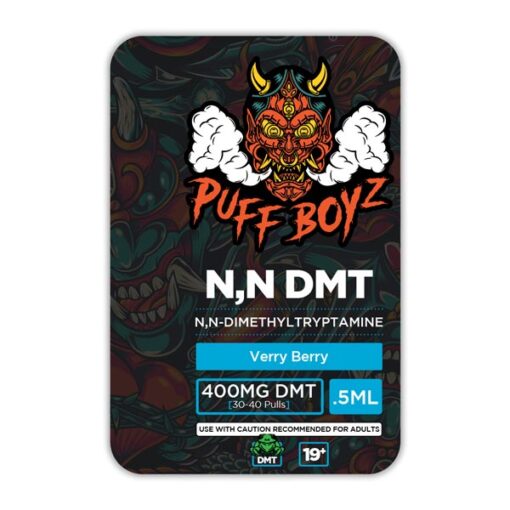
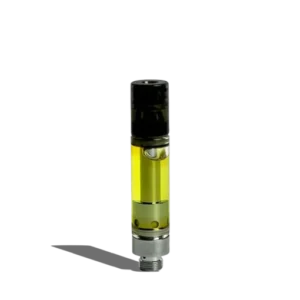
Puff Boyz DMT Vape Cartridge (.5ml / 400mg) – Verry Berry

$100.00
Product Highlights
-
Dosage: 400mg DMT infused in 0.5ml of vape oil
-
Form: Disposable or 510-thread cartridge (check variant)
-
Flavor: Verry Berry – sweet, tart, and smooth
-
Onset: Effects often begin within seconds
-
Duration: 10–30 minutes (typical for vaporized DMT)
-
Use: Controlled deep-breath puffs recommended in a safe setting
DMT: An Educational Overview
DMT, short for N,N-Dimethyltryptamine, is a naturally occurring psychedelic compound that has attracted scientific, historical, and cultural interest for decades. It belongs to a class of compounds known as tryptamines, which are structurally related to serotonin, a neurotransmitter found in the human body. DMT can be found in certain plant species and has also been detected in trace amounts in some animals and humans.
What Is DMT?
DMT is a psychoactive compound known for producing profound alterations in perception, cognition, and sensory experience. Researchers classify it as a psychedelic substance because it can significantly affect consciousness and perception.
The compound has been studied in both laboratory settings and cultural contexts. Interest in DMT has grown as scientific institutions have expanded research into psychedelics and their effects on the brain.
Historical Background
DMT-containing plants have been used for centuries in some Indigenous traditions, particularly in parts of South America. Certain traditional preparations have played important ceremonial and cultural roles within specific communities.
Researchers began studying DMT during the twentieth century as interest in psychoactive compounds increased within scientific and medical fields. Since then, various studies have explored its pharmacology, effects on perception, and interactions with the nervous system.
Chemical Structure
DMT belongs to the tryptamine family of compounds. Tryptamines share structural similarities with naturally occurring neurotransmitters and other biologically active molecules.
Scientists study DMT because of its ability to interact with serotonin receptors in the brain. These interactions are believed to contribute to the compound’s psychoactive properties.
How DMT Affects the Brain
Research suggests that DMT primarily interacts with serotonin receptor systems. Serotonin receptors play important roles in mood regulation, perception, cognition, and sensory processing.
Scientists continue to investigate how these interactions influence conscious experience and neural activity. Although significant progress has been made, many questions remain unanswered.
Scientific Research
Interest in psychedelic research has increased in recent years. Universities and research institutions have conducted studies examining various psychedelic compounds, including DMT.
Areas of scientific investigation include:
- Brain activity and consciousness
- Perception and sensory processing
- Neurochemistry
- Cognitive effects
- Psychological experiences
Researchers emphasize the importance of rigorous scientific methods and ethical oversight when studying psychoactive substances.
Natural Sources
DMT has been identified in numerous plant species distributed throughout different regions of the world. The concentration and distribution of DMT can vary significantly depending on species, environmental conditions, and biological factors.
The presence of DMT in nature has contributed to ongoing scientific interest regarding its ecological and biological significance.
Legal Considerations
The legal status of DMT varies considerably around the world. In many jurisdictions, DMT is classified as a controlled substance and its possession, manufacture, distribution, or use may be restricted or prohibited by law.
Regulations differ among countries, states, and regions. Individuals should always consult local laws and regulations for accurate and current legal information.
Public Health and Safety
Psychoactive substances can present risks, particularly when used outside of regulated research settings. Researchers and health professionals emphasize the importance of evidence-based information, public education, and awareness of potential health considerations.
Scientific understanding of psychedelic compounds continues to evolve as additional research becomes available.
The Importance of Reliable Information
Because psychoactive substances are often discussed online, it is important to rely on credible scientific sources, peer-reviewed research, and established educational institutions when seeking information.
Accurate information helps support informed discussions and promotes a better understanding of ongoing scientific research.
Conclusion
DMT remains a subject of interest within neuroscience, psychology, pharmacology, and anthropology. Its unique chemical structure, historical significance, and effects on perception have made it one of the most studied psychedelic compounds. As research continues, scientists hope to gain a deeper understanding of its mechanisms, biological interactions, and broader significance within the study of consciousness and the human brain.
Be the first to review “Puff Boyz DMT Vape Cartridge (.5ml / 400mg) – Verry Berry”
Related products



Reviews
There are no reviews yet.