




Understanding DMT Research, Tryptamines, and Modern Vaporizer Technology
N,N-Dimethyltryptamine (DMT) is a naturally occurring psychedelic compound that belongs to the tryptamine family of chemicals. Over the past several decades, DMT has become a subject of interest among neuroscientists, pharmacologists, anthropologists, and researchers studying consciousness. While legal status varies widely across jurisdictions, DMT continues to be examined within scientific and historical contexts to better understand its effects, origins, and biological interactions.
What Is DMT?
DMT is classified as a psychedelic compound due to its ability to significantly alter perception, cognition, and conscious awareness. Structurally, it belongs to a group of compounds known as tryptamines, which share similarities with naturally occurring neurotransmitters such as serotonin.
Scientists study DMT because of its unique interaction with brain receptor systems and the unusual subjective experiences reported in research settings.
Natural Occurrence
One of the most interesting aspects of DMT is that it occurs naturally in numerous plant species around the world. Researchers have identified DMT-containing plants in South America, Africa, Asia, and other regions.
The compound has also been detected in trace amounts within certain animals and humans, although the biological significance of these findings remains an active area of research.
Historical and Cultural Background
Certain Indigenous cultures have historically utilized DMT-containing plants within ceremonial and spiritual traditions. Anthropologists have documented these practices for many years, emphasizing the cultural significance of these traditions within specific communities.
Understanding the historical context helps researchers appreciate the broader relationship between humans, plants, and psychoactive compounds throughout history.
Scientific Research
Modern scientific interest in psychedelics has expanded considerably. Universities and research institutions have investigated how psychedelic compounds affect brain activity, perception, memory, cognition, and consciousness.
Research areas commonly include:
- Neurobiology
- Pharmacology
- Psychology
- Consciousness studies
- Brain imaging
- Cognitive science
Scientists continue exploring how psychedelic compounds interact with neural networks and influence subjective experience.
Serotonin Receptors and Brain Activity
Current research suggests that DMT interacts with serotonin receptor systems in the brain. These receptors play important roles in regulating mood, perception, sensory processing, and cognition.
The relationship between serotonin receptors and psychedelic experiences remains an important focus within neuroscience research.
Understanding Tryptamines
Tryptamines represent a broader class of naturally occurring and synthetic compounds. Scientists study tryptamines because they share structural similarities with biologically important molecules.
The study of tryptamines contributes to a greater understanding of neurochemistry, neurotransmission, and receptor interactions.
Advances in Neuroscience
Technological advances have enabled researchers to study the brain with greater precision than ever before. Modern imaging techniques help scientists observe changes in brain activity associated with various states of consciousness.
As research tools continue to improve, scientists gain new insights into how complex neural systems function and interact.
Vaporizer Technology
Separate from the study of psychoactive compounds, vaporization technology has evolved significantly in recent years. Vaporizer devices are electronic systems designed to heat liquids or other materials without direct combustion.
Modern vaporization systems often include:
- Rechargeable batteries
- Heating elements
- Airflow systems
- Reservoir chambers
- Temperature controls
These technologies are used across various industries and applications depending on product design and regulatory requirements.
Components of a Cartridge System
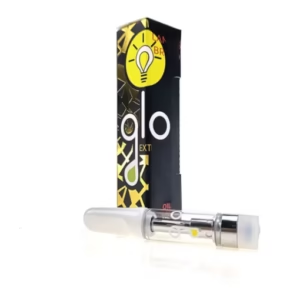
Many vaporization systems utilize cartridge-based designs. A typical cartridge may contain:
Reservoir
The reservoir stores the liquid formulation.
Heating Element
The heating element converts electrical energy into heat.
Airflow Pathway
The airflow system directs vapor through the device.
Mouthpiece
The mouthpiece serves as the final exit point for vapor.
Manufacturers continue refining these systems to improve consistency, reliability, and performance.
Product Safety and Quality Assurance
Quality assurance plays an important role in regulated manufacturing industries. Testing procedures may evaluate:
- Product consistency
- Material quality
- Manufacturing standards
- Contaminant screening
- Device performance
Quality control programs help ensure compliance with applicable regulations and industry standards.
Legal Considerations
The legal status of DMT varies significantly around the world. Many jurisdictions classify DMT as a controlled substance, while regulations regarding research and scientific investigation may differ.
Individuals should always consult current local laws and regulations regarding any controlled substances.
Conclusion
DMT remains an important topic within neuroscience, pharmacology, anthropology, and consciousness research. Continued scientific investigation may provide deeper insight into the brain, perception, and the biological mechanisms underlying altered states of consciousness. At the same time, advances in vaporization technology and manufacturing standards continue to shape broader discussions about device engineering, product quality, and consumer safety across multiple industries.
Be the first to review “Puff Boyz NN DMT Cartridge 5ml Banana Flavor”
Related products






Reviews
There are no reviews yet.